
Channel 4’s recent 24 Hours in Police Custody special has brought renewed public attention to the role that forensic science can play in complex investigations, especially within cold cases. James Beard, Forensic Scientist at Forensic Access, features in the filming, and the programme provides a glimpse of the work possible through new scientific methodologies and investigative techniques. It also reinforces the importance of reviewing all available avenues, including old lines of investigation and new potential leads.
Broadcast on 13th and 14th April 2026, the documentary follows the reopened investigation into the 2013 murder of Una Crown, exploring how forensic evidence contributed to the case many years after her death. While the programme centres on the investigation itself, it also highlights the detailed scientific work that underpins the examination, interpretation and presentation of biological evidence in complex cases.
What is Forensic Biology?
Forensic biology is a key area within forensic science. It covers the identification, examination and interpretation of biological material that may be relevant to a criminal investigation, including blood, semen, saliva, hair and DNA. In practice, the discipline goes far beyond the recovery of samples or the production of a laboratory result. Biological evidence must be considered carefully within the context of the case, the circumstances in which it was recovered, the potential routes by which it may have been deposited, and the limitations of what the findings can properly demonstrate.
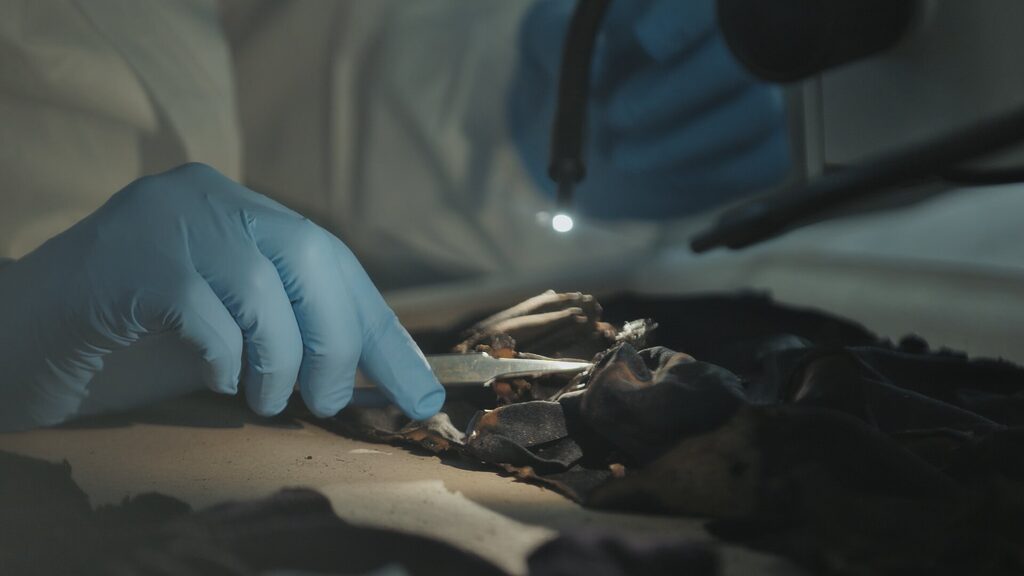
Working with Forensic Biology Experts at Forensic Access
James Beard is part of the Forensic Access biology team and contributes to this work through both casework and technical engagement. He has featured in several Forensic Access webinars covering important areas of forensic biology, including DNA evidence, the examination of items for body fluids, and the evaluation of complex evidence within the context of the case. These are all areas that regularly arise in criminal cases and can have a significant impact on how biological evidence is understood and applied.
DNA evidence is often viewed as one of the most definitive forms of forensic evidence, but its interpretation is rarely straightforward.
Questions can arise around:
- How DNA was deposited
- How long DNA may have been present
- Whether transfer may have occurred directly or indirectly
- Whether contamination is a possibility
- The significance that should be attached to the findings in the context of the issues in dispute.
A scientist working in this field must be able not only to understand the technical science, but also to apply it carefully to the facts of a case. They must also keep abreast of both current research and development, and improvements in applicable scientific methodologies.
James Beard’s contribution to discussions around these issues reflects the kind of expertise needed in modern forensic biology. Cases can involve disputed accounts, limited material, historical evidence, mixed DNA profiles, complex reporting structures and competing interpretations. In those circumstances, careful scientific review and balanced interpretation are essential. They help ensure that evidence is neither overstated nor misunderstood.
How Forensic Biology Supports Criminal Cases
The work of the Forensic Access biology team spans a broad range of forensic matters. The department supports cases involving body fluid evidence, DNA interpretation, blood pattern analysis, case review, critical appraisal of forensic findings and expert reporting. The team’s work can be relevant at many different stages of an investigation or legal proceeding, from early review of evidential issues through to report preparation and court testimony.
This work is carried out across a wide range of case types. Biological evidence may be central in offences such as murder, assault and sexual offences, but it can also be significant in historical cases, cold case reviews, appeals, disputed allegations, and matters where the presence or absence of biological material forms part of the evidential picture. Each case requires close attention to detail and careful consideration of what the available findings do, and do not, support.
The Forensic Access biology team works with both defence and prosecution teams as well as directly with law enforcement investigators. That breadth of instruction reflects the importance of robust scientific expertise across the justice system. In some cases, the team may be asked to review evidence on behalf of defence solicitors or counsel, examining the strength of the scientific findings, the way they have been interpreted, or whether alternative explanations have been properly considered. In other cases, forensic expertise may assist investigative teams where biological evidence is complex, contested or requires specialist evaluation.
Working across both areas requires the same scientific discipline in every case. The value of forensic biology lies in objective analysis, careful review and clear reporting. The role of the forensic scientist is to assist with the interpretation of the evidence, explain its significance within the case context, and identify limitations where they exist. This is particularly important in criminal proceedings, where the way forensic evidence is presented can have a profound effect on how it is understood by those making legal decisions.
Forensic biology also poses wider questions around case strategy and evidence review. Biological findings are often considered alongside other types of forensic evidence, including witness accounts, timelines and digital material. The forensic biologist therefore needs to understand not only the laboratory science, but also how that science fits within the broader evidential picture. A finding that appears compelling in isolation may require more cautious interpretation once the wider circumstances are considered.
Independent Review and Expert Interpretation
The experienced forensic scientists at Forensic Access can play an essential role in the review and interpretation of active cases and cold cases. They can provide feedback from a holistic perspective beyond their own discipline, to the potential wider forensic opportunities which may have not been available at the time, or potentially even missed at the first time of asking.
Their work does not stop at the point of analysis. It also involves reviewing evidence in detail, considering the reliability and significance of findings, identifying issues that may require further scrutiny, and presenting conclusions in a clear and balanced way that can be understood by investigators, legal teams and the court.
A second opinion on biological evidence may identify points that require clarification, highlight where further work may be needed, or bring a more measured interpretation to a finding that has been expressed too broadly. This is one reason why independent review remains so important. In some cases, it can also help ensure that the evidential significance of biological material is properly explored where it may otherwise be overlooked.
Forensic Access has long supported legal professionals, investigators and organisations with independent forensic expertise across a range of disciplines, and the biology team forms an important part of that offering. The team’s role is not limited to laboratory science alone. It includes critical review of evidence, interpretation of results, assessment of case circumstances, preparation of expert reports and, where needed, giving of evidence in court.
The combination of technical expertise and practical casework understanding is particularly valuable in complex criminal matters. Biological evidence can carry considerable weight, but it must always be interpreted with care. The presence of DNA does not automatically answer every question about how it came to be there or what conclusions can properly be drawn from it. The recovery of body fluid may be highly relevant, but its meaning depends on where it was found, how it was deposited, and how it relates to the issues in dispute. Equally, the absence of biological evidence does not necessarily exclude an allegation or proposition. These are the kinds of questions that forensic biologists are routinely asked to address.
The 24 Hours in Police Custody special documentary provides a useful opportunity to highlight this work in a broader way. Public attention often turns to forensic science in high-profile cases and television coverage, but much of the discipline depends on detailed scientific reasoning carried out away from public view. Forensic biologists contribute by examining evidence carefully, applying specialist knowledge to the facts of the case, and ensuring that conclusions are expressed with accuracy and restraint.
The programme also highlights the breadth of work carried out within forensic biology. In this case, the Forensic Access biology team contributed to the Y-STR DNA profiling work carried out on fingernail clippings from Una Crown, working in conjunction with another forensic laboratory as part of the wider forensic examination.
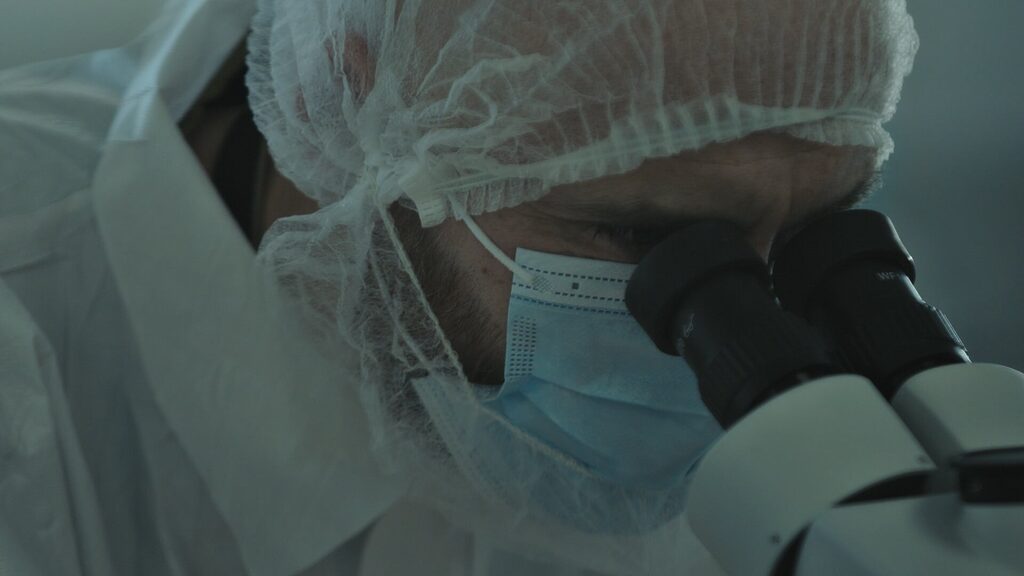
Build Understanding Through Training and Webinars
Alongside casework, Forensic Access also supports professional learning by delivering training and webinars that explore forensic evidence, interpretation and the practical considerations that arise in criminal proceedings. Topics such as DNA interpretation, transfer and persistence, body fluid identification, and the use of streamlined reporting can affect how evidence is approached at an early stage. Greater understanding across a broad range of forensic topics supports more informed questioning, stronger preparation and more effective instruction within criminal cases. This is particularly important where legal teams, investigators and courts need to understand what a result shows, but also the potential limitations and conclusions that can be drawn from the evidence.
Contact Us
If you require expert support in cases involving DNA evidence, body fluids, blood pattern analysis or a wider range of forensic evidence, get in touch with our casework team on 01235 774870 or at science@forensic-access.co.uk.
This case study features in The Expert Witness: Personal Injury (Issue 67 – June/July 2026).
Get in touch
Let’s talk
**Please note that we can only take instruction via a Barrister or Solicitor, we do not take instruction directly from private individuals.
We are always interested in talking to experienced forensic scientists with a minimum of 5 years of forensic science work who are interested in working as Consultants to undertake ad-hoc work for us.
Call us
01235 774870
Email us
science@forensic-access.co.uk